



The COVID-19 pandemic upended financial markets in early 2020 which resulted in very low global growth and inflation. However, central banks around the world coordinated their fiscal and monetary policy at unprecedented levels, and that, coupled with the rapid development and roll-out of vaccines, led to global financial markets recovering relatively quickly.
Many equity markets have reached new highs post-pandemic
Market growth has been exceptionally strong, but alongside these encouraging results, inflation has now spiked to multi-decade highs, the effect of which is being felt around the world. High inflation rates usually lead to interest rates going up and we have already started to see that adjustment in South Africa and abroad.
From low inflation to higher inflation
The actions of central banks to provide liquidity in response to the Covid-19 pandemic served to keep interest rates at all-time lows. Low-interest rates in turn are conducive to good stock market returns in the right circumstances. We have seen this play out in the US stock market in the recent past. With the world economy now experiencing higher inflation, resulting in central banks increasing interest rates, investment return opportunities have shifted.
Here’s where you will notice the changes in asset allocations
This shift will become evident in the mix of cash, bonds, property and shares that are held in any portfolio. Offshore portfolios have generally been very light on exposure to bonds due to the low-interest rates. This may start to change as rates increase. Inflation-linked bonds will likely stay in portfolios because their coupon repayments are indexed to inflation and so can offer excellent diversification within your portfolio.
Also, the composition of what type of shares are held will be affected. With higher interest rates, companies that are cash flush will outperform those that are highly geared. Companies that are dynamic and able to pass on price increases to customers will fare better than those that cannot.
In a high inflationary environment, exposure to real assets may serve to improve returns and protect value. Therefore, you may also see some exposures to property, alternative energy and infrastructure.
Commodities (which include precious metals such as gold and silver) have traditionally performed well during periods of high inflation. They have benefited from improving economic conditions post-COVID and you may see some managers capitalizing on this trend which will likely continue due to the ongoing global supply-and-demand imbalances.
While cash can protect value temporarily, it is not an ideal investment during a high inflation period as the purchasing power of the capital is eroded by inflation.
Broad investment choices based on different inflation/growth combinations
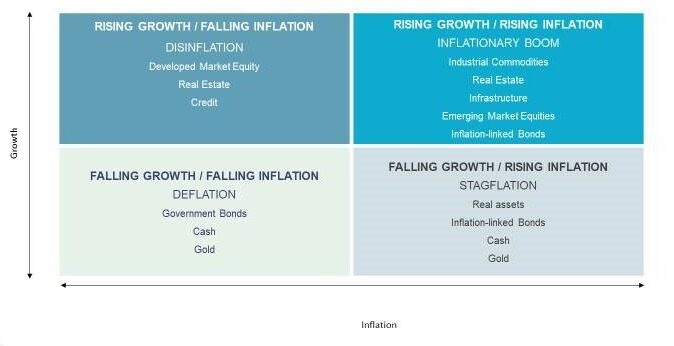
This diagram below shows which sectors/asset allocations are generally favourable for particular market situations.
So far, post-COVID global financial conditions have tended towards the conditions represented by the top left-hand block, namely rising growth / falling inflation. We are now seeing a shift toward the bottom right-hand block: lower growth / rising inflation.
What’s the bottom line?
No matter what the economic outlook is, a resilient investment portfolio is one that is diversified across different asset classes and regions, as well as a variety of asset managers.
At Netto Invest, our advice is always to invest for the long term rather than attempting to time the market. If you have questions or concerns about the level of diversification within your investment portfolio, or any other aspect of your financial, investment or estate planning, now’s the time to contact your wealth manager.

Christopher Pecego, CFP®
B.Com
