



Holding cash in a savings account or money market deposit is often considered a safe and secure investment, but is it a good investment in terms of long-term financial planning?
Let’s take a look at three things: look at the pros and cons of investing in cash, the importance of considering tax implications, and the difference between simple and effective interest rates.
What are the advantages of investing in cash?
One of the main advantages of holding cash is the easy access to your money. Cash is a liquid asset, meaning it can be easily moved into other investments or used to cover unexpected expenses. Additionally, cash is generally a low-risk investment, especially when compared to other types of investments such as shares or property. However, this does not mean that investing your cash through a bank has zero risk attached to it. Banks can fail: Silicon Valley Bank was the largest bank by deposits in the Silicon Valley area in the US and is the latest example of a bank going into bankruptcy.
What are the disadvantages of investing in cash?
One of the biggest downsides to investing in cash is that cash typically earns low returns in comparison to other asset classes. In some cases, the interest rate on cash may not even keep up with inflation, meaning the real value of your investment actually decreases over time. This can lead to a loss of purchasing power which in turn can negatively impact your long-term financial goals.
How taxation affects the return on your cash investment
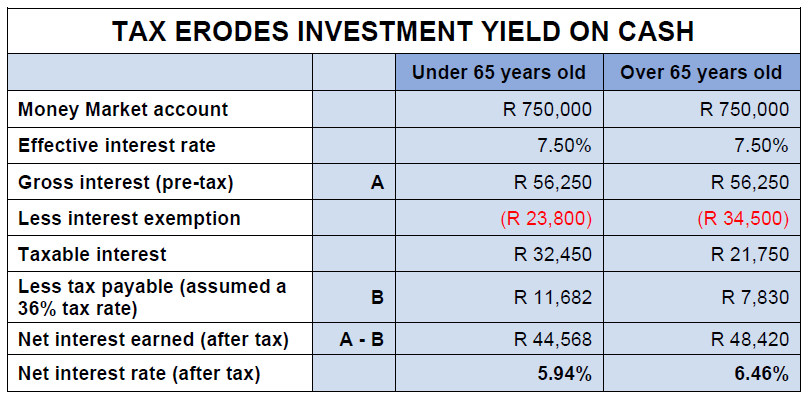
Depending on the type of account or investment vehicle you use to hold your cash, you may be taxed on the interest you earn. Tax erodes the investment yield on your cash, as illustrated in the example below:
Simple vs. effective interest rates – what’s the difference?
When considering the interest earned on cash investments, it’s essential to understand the difference between simple and effective interest rates. Simple interest is calculated based only on the principal amount invested; effective interest takes into account the interest earned on the investment over time.
Effective interest rates typically produce higher returns than simple interest rates since the interest earned is reinvested and you begin to earn interest on interest (this is called the compounding effect).
For example, let’s say you invest R1,000 in a savings account with a simple interest rate of 1%. After one year, you’ll earn R10 in interest. However, if you invest that same R1,000 in an account with an effective interest rate of 1%, you’ll earn slightly more due to the effect of compound interest. Assuming the interest is compounded annually, after one year you’ll earn R10.10 in interest.
While this may seem like a small difference, over time the effects of compound interest have a significant impact on your investment returns. When comparing interest rates between different institutions it’s important to ensure you are comparing like-for-like interest rates.
Here is an example of earnings with a simple interest rate versus an effective interest rate:

The example above shows how, over time, an effective interest rate of 7.50% is a better choice than a simple interest rate of 8.50%; be wary of clever marketing when comparing interest rates offered between different institutions.
What do we conclude?
In conclusion, investing in cash is a good choice for short-term financial goals or as a low-risk component of a diversified long-term investment portfolio. However, it’s important to carefully consider the interest rates and tax implications of any cash investment before making a decision. Additionally, understanding the difference between simple and effective interest rates can help you make informed decisions and maximise your investment returns over time.

By Jonathan Botha, CFP®
B.Com
