
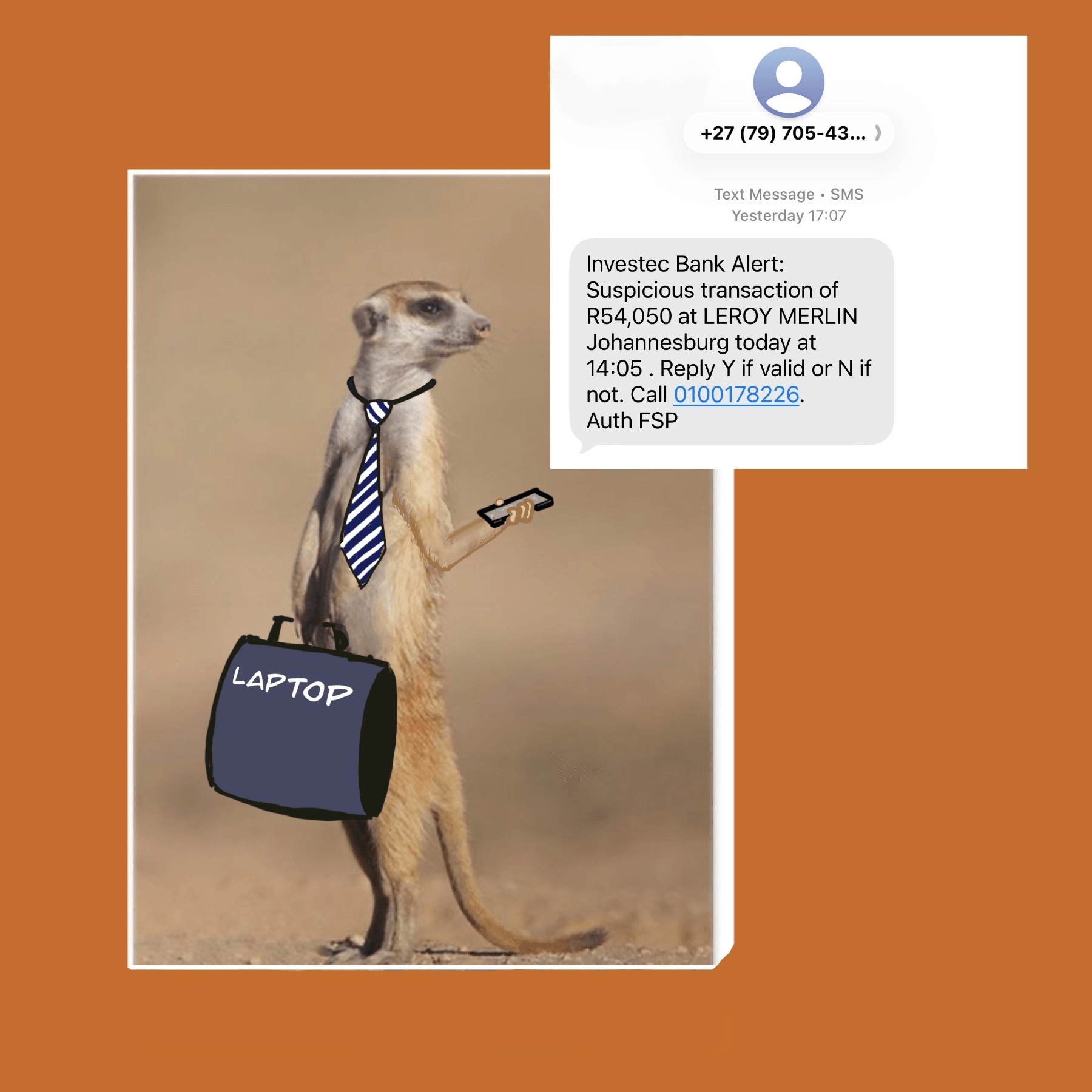


Here’s a fresh episode of “Real Bank Scams of South Africa” to help you sharpen your analytical skills, because you’re wise enough to realise that it’s not a matter of IF you’ll ever receive a fake message, but more a matter of WHEN.
While the wording of fake messages is ever-evolving, a scammer’s intention is always the same: to interrupt your rational thought processes long enough that you divulge sensitive security information.
So, the next time you receive a message that evokes any sense of urgency, definitely treat it as an emergency. Take a leaf out of the emergency first aid manual and train yourself to Stop. Think. Breathe. And only then… Act.
Stop. Think. Breathe. Act.
Your first Action is always to look critically at the message and its sender, and that’s what today’s Meerkat Alert is all about.
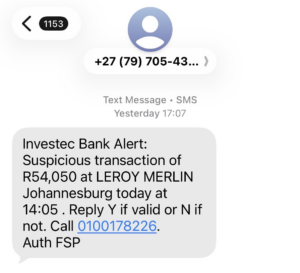
At first glance
What we notice immediately is that the scammers are getting better at grammar, punctuation and spelling. This message is quite polished with its use of a colon, intelligent line spacing and accurate capital letters.
🚩 A tiny red flag is the one extra space between the supposed time of 14.05 and the full stop. However that would easily be overlooked if you only gave it a cursory glance.
🚩 A larger red flag – ironically – is that final line “Auth FSP”. They’ve tried to introduce a sense of legitimacy by implying that the message comes from an “Authorised Financial Services Provider”. It somehow feels a little off, but it’s still something one might ignore.
🚩 Finally, the number that sent the suspicious SMS wasn’t the usual format for messages from our recipient’s bank. If anything feels suspicious, assume everything is suspicious.
The major concern here: three invitations to make contact
The message format we’re more familiar with provides an internet link you can follow. However, these scammers clearly want to speak to you in real time because they’ve embedded three separate “hooks” in their message to try and lure you into making direct contact.
Why does this matter?
- If you reply via text message (regardless of whether it’s with a Y or an N), they know that you’re on your device and likely to answer an immediate phone call.
- Similarly, if you call the number they have provided, you’re already speaking to them (of your own accord).
If they convince you to interact via their engineered contact points, they are much more likely to succeed in scamming you.
Here’s why…
They’ve set up a classic case of primed expectations.
You are primed to expect that the person on the other end of the call is trustworthy, so you are willing to do as they ask. And – master manipulators that they are – the scammers will exploit that expectation… expertly.
In scams like these, people end up confirming account details, passwords and PINs that enable the scammers to empty your bank accounts and even take out new loans in your name, all while convincing you that they are saving you from fraud.
The solution
Never engage using the contact methods in the message.
Instead, call your bank directly using the fraud line number you have saved on your phone.
If you do get caught out – don’t be embarrassed
Your bank will never ask you to confirm account details, passwords or PINs over the phone. But we all know these scammers can be convincing. 🤷
- If you do engage via such a message, put the phone down as soon as you become suspicious.
- And then call your bank – on its official fraud line, saved on your phone for that exact purpose.
- Avoiding scams altogether is your absolute priority, but prompt damage control is still essential whenever your defences are breached.

0 Comments