


My niece once had a guinea pig called Mr Bingley. He was a free-ranging fellow who lived underfoot, scuffling and grunting to himself while trying to dodge the children catching him for cuddles.
Mr Bingley never answered to his name, but that didn’t matter. If you wanted his attention, all you had to do was crackle the food packet and he would race over to you immediately.
And when you think about it, we’re all rather like Mr Bingley…
… because the mere mention of certain institutions and/or acronyms acts like the crackle of a snack packet, and we sit up and pay close attention.
Institutions or acronyms that fit this description are your bank, or the Reserve Bank, or the South African Revenue Service (SARS), or any mention of FICA update requirements. All of these could be linked to important actions and require timeous attention.
And of course, cyber scammers are aware of these “crackly packets”.
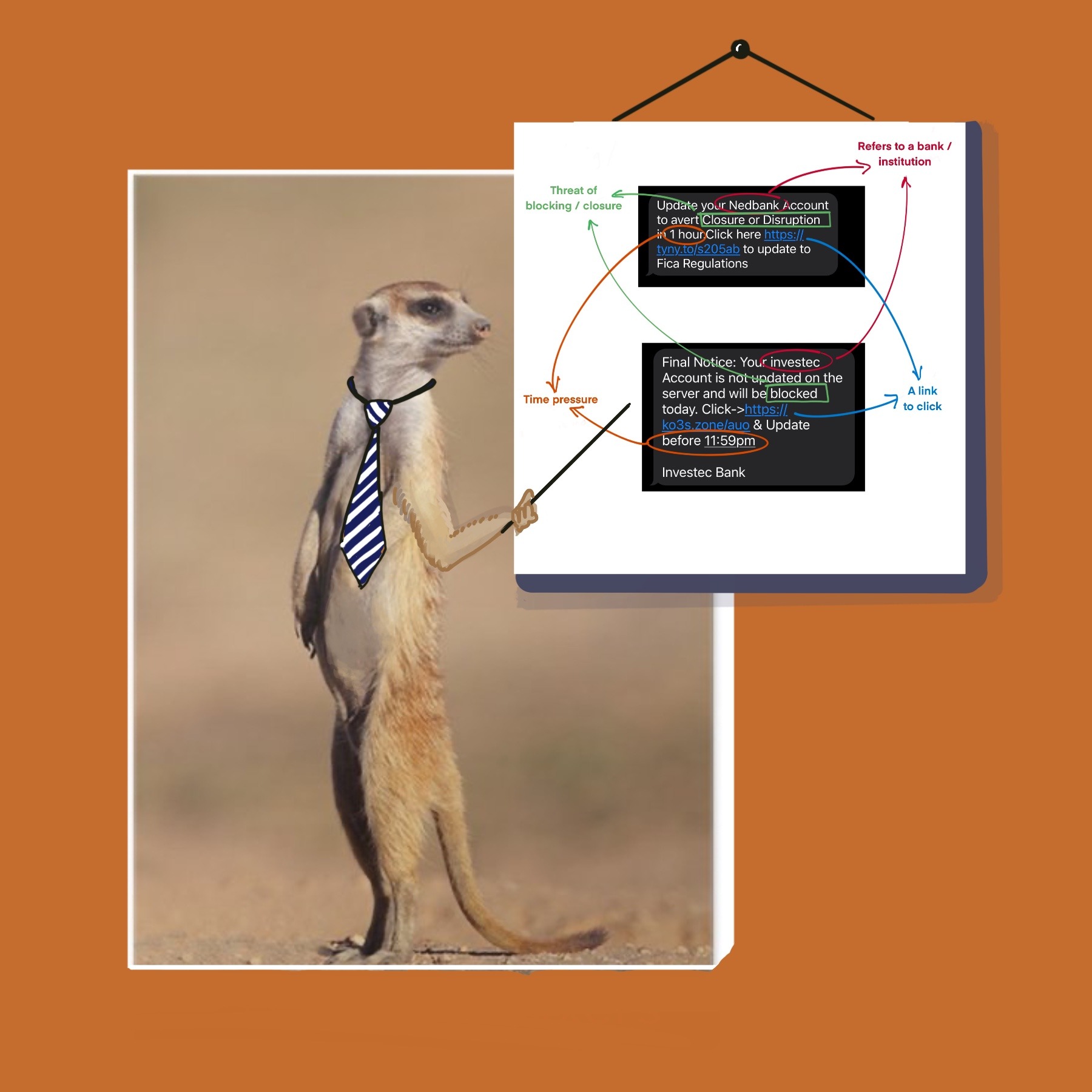
So today we are going to look at the anatomy of a dodgy message, so that you can recognise when your anxieties are being ramped up to override your instinctive common sense.
We are using two real-life messages, both received by the same person. Different messages, but as you can see below, they have important characteristics in common:
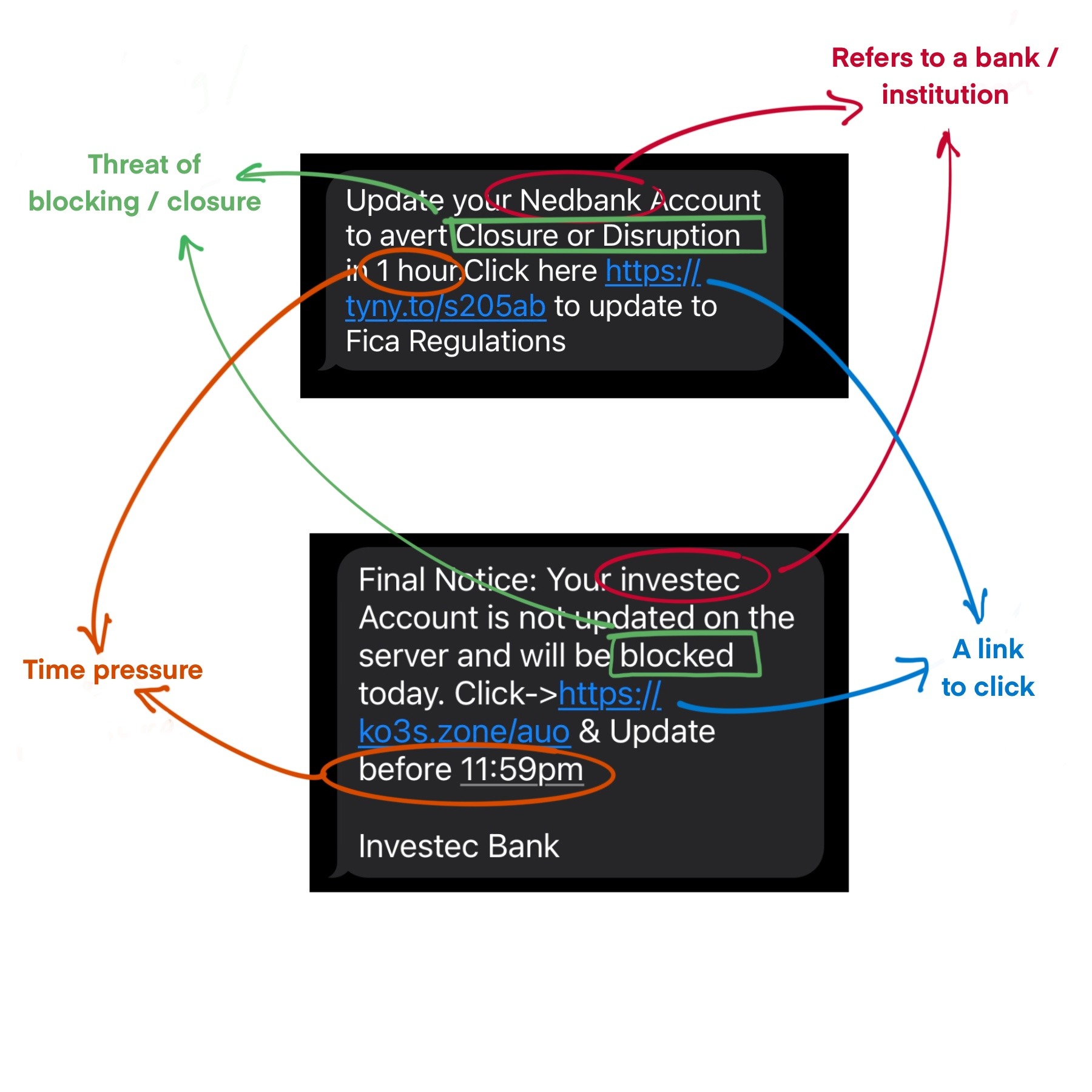
What are the common characteristics of scam messages?
- mention a bank (or another institution you might have financial dealings with)
- imply dire consequences if you don’t take the action required
- put you under time pressure to comply
- give you a clickable link to follow
These messages look real at first glance, so it helps to be sensitised to the factors of legitimacy, consequences, and urgency that they tend to fall back on.
At the same time, you may have noticed a couple of things that are a dead giveaway that these messages were sent by scam artists. In one of these specific messages, there is a typo; failing to capitalise the bank name. A typo of any sort would be a giveaway, as would be the fact that you receive a message seemingly from a bank with which you do NOT do business!
If you stay alert, these mistakes will ring your alarm bells and save you from many a trap.
What to do if you HAVE clicked the dodgy link?
There’s no shame in falling for one of these scams as we all have off days from time to time. The important thing is to take action immediately to limit the possible financial consequences. Log into your banking website via your usual safe method and change your login credentials.

0 Comments